Ko te tangata whakaara pakanga i muri nei, he rite anake ia ki te kōkā harakeke – Nā Kīngi Tāwhiao
The person who raises war in the future is like a dry, useless flax bush.- King Tāwhiao
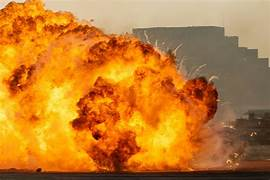
As bombs fall on families in Iran, our Prime Minister stands in lockstep with the United States and Israel, affirming and defending what many across the world are naming as genocide. This is not new. It is imperialism. It is economics.Money / power is at the root of all of this. It is capitalism. And it has always operated this way.
It operated this way here.
Māori were dispossessed of land, rivers, forests, and seas under the same ideological machinery. First comes the removal of history. Then comes the propaganda. Noam Chomsky, in Manufacturing Consent, describes the narrow parameters within which media narratives are allowed to operate. Within those confines, violence becomes justified, even sanitised.
We see it carved into stone across Aotearoa — memorials to “brave pioneers” — while Māori were framed as “savages.” Those of us who grew up with the Māori side of the story recognise that framing for what it is.
Listening to Iranian voices speak about the US-backed overthrow of their democracy, about decades of sanctions that have strangled ordinary people, I hear echoes of our own history. When schools are bombed and children killed, our Prime Minister cannot bring himself to clearly call for peace. Instead, the language shifts toward justification: there must be reasons, Iran is an “evil regime.”
The United States has a long record of destabilising democratically elected governments — in the Middle East, Latin America, and elsewhere. Iraq alone saw catastrophic civilian death. Gaza continues to endure devastation. Imperial powers coordinate their violence. They legitimise one another.
In 1863, the New Zealand Government constructed the claim that Waikato Māori intended to attack Auckland. That narrative became justification for invasion. The result was raupatu, land confiscation, economic destruction, and intergenerational poverty. Through the Native Land Court and associated policies, iwi across the country experienced similar fates. The consequences remain with us today.
The language is familiar. The moral architecture is the same.
Yet there has always been resistance grounded in wisdom.
In the Māori world, figures such as Kīngi Tāwhiao, Te Atakohu Wiremu Tāmihana, Mere Rikiriki, and Te Puea Hērangi Tūpāea stood for peace in times of immense violence. In more recent generations, people like Whaiā McClutchie, Eruera Manuera, and Kīngi Īhaka, alongside countless unnamed pakeke within whānau, worked to transform violent histories into pathways of reconciliation.
In the Pākehā world too there were dissenting voices — Members of Parliament who protested the invasions, Quakers who refused war, strands of radical Catholicism that sided with justice, and ordinary families who chose compassion over conquest.
We must remember them all.
E kī ana ko te hoari whakawai e mahi ana i tana mahi.
E kī ana, patua i te tahatū o te rangi kia rongo koe i te kōrero.
Ko tā Wiremu Tāmihana i te Paipera, nā Paora, i muri i te pahuatanga o Waikato:
“Kia aroha tētahi ki tētahi, me whakanui ki te hōnore.”
Me aroha e tāua te mano tini ka tārukehia i te pakanga i Iran.
Rurea taitea ka waiho ko taikākā anahe.
There is a sword of deception doing its work. We are told to look to the horizon where the wānanga is kept, so that knowledge may be heard.
After the invasion of Waikato, Wiremu Tāmihana turned to the words of Paul: love one another and uplift each other with honour.
That call remains.
Let us show compassion to the thousands suffering in Iran. Strip the outer wood to get to the heartwood. Good peace. Pai mārire.