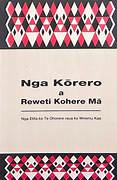
There are some people whose presence steadies you long after they have left the room. For me, that person was Dr Moana Jackson — mentor, tauira, rangatira, and friend.
We first met in 2013 at the He Manawa Whenua International Indigenous Conference in Kirikiriroa, Hamilton. Dr Hayley Cavino and I were presenting our doctoral research on Māori experiences of historical intergenerational trauma and wellbeing. We had been awarded doctoral scholarships on behalf of Te Atawhai o Te Ao. In the midst of our presentation, I quoted Moana to a room of about fifty people. As I spoke his words aloud, he quietly entered the room and witnessed them being carried forward

Afterwards, we connected instantly. From that day, he became a mentor within the wider Te Atawhai o Te Ao network. His guidance was never loud or self-promoting. Instead, it was deliberate and generous. One lesson in particular remains etched in my spirit: stay calm in the face of a storm, and use eloquence in the face of adversity.⁰

Te Atawhai O Te Ao Doctoral & Masters Scolars 2013
Moana embodied that principle.
He was not enamoured with technology or spectacle. He preferred wānanga — kanohi ki te kanohi, hands-on, relational spaces. He wove humour through even the most serious constitutional critique, disarming audiences while taking them on a journey through his decades-long engagement with the legislative realm. In listening to him, you were given a front-row seat to the evolution of resistance: from analysing injustice through a colonised lens, to consciously decolonising that lens, and finally to articulating what he called a process of Maorification.
Eloquence in the face of adversity – in action
Maorification was not about dominance. It was about restoration. It was about centring Māori values, tikanga and relational accountability as the normative framework for justice in Aotearoa. It asked us to imagine systems shaped not by imposed hierarchy, but by whakapapa, collective responsibility, and mana.
I invited Moana to lecture my counselling and social work students during a day class. That same evening, he returned as guest speaker for my Year 1, 2 and 3 Te Whiuwhiu o Te Hau Māori Counselling students. His soft, gentle tone carried a precision that could melt colonial defensiveness like a hot knife through butter. Students would arrive with assumptions and leave with reflection — not because they were attacked, but because they were invited to think differently.

Te Whiuwhiu O Te Hau Māori Counselling year 2, and 3 2013
Our collaborations deepened over time. I had the privilege of contributing to the updated 2018 edition of He Whaipaainga Hou.

Engaging in rangahau for the updated Whaipaainga Hou edition 2018 at my home
We stood together in social justice forums, before the Waitangi Tribunal in the prisoners’ right to vote claim, and in the development of Hōkai Rangi, the Māori strategy for prisons.

Launching Hookai Rangi Māori strategy for prisons at parliament – August.2019
We appeared side by side in the 2019 Royal Commission into Abuse in State and Faith-Based Care, and during the Oranga Tamariki claim, standing in the “Hands Off Our Tamariki” protest at Parliament.

Royal Commission November 2019
In each setting, Moana modelled the same disciplined practice: ata whakaaro — be respectfully thoughtful; ata whakarongo, ata titiro, ata kōrero — listen, observe, then speak with care; ata kaitiaki — stand as a respectful guardian of Māori narratives. He did not react. He responded. And he did so with humour, dignity and unwavering clarity.

#Hands off Our Tamariki march to Parliament
As I reflect on his idea of Maorification, I believe its aspirations are urgently practical. It asks us to centre tikanga within our institutions now — in classrooms, courtrooms, social services and policy tables. It requires investment in Māori-led solutions, constitutional transformation grounded in Te Tiriti, and the everyday courage to challenge prejudice without replicating its violence.

When I encounter bias or witness social injustice, I often pause and ask myself: How would Moana respond? The answer is never to inflame. It is to steady the space. To listen deeply. To speak precisely. To protect what must be protected. To transform without dehumanising.
Moemoe e te rangatira
Dr Moana Jackson passed away on March 31st 2022. One of my enduring regrets is that I was unable to attend his tangihanga to farewell him kanohi ki te kanohi. That absence sits quietly with me. Yet I have come to understand that the truest farewell is not only spoken at the urupā, but lived in the continuation of his work.

Your vision of Maorification is not a theory suspended in aspiration. It is a discipline of being — one we must practise now, with calm hearts in the storm, and eloquence in the face of adversity.