A Good Pākehā Sir Tim Shadbolt R.I.P
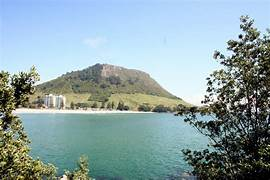
Mauao / Mount Maunganui
Ko te kupu wawara o te riri, ka mākiri
The words of anger and no compassion go unfounded
Introduction
I grew up in Mount Maunganui, and the idea that the maunga could collapse and kill six people is a horrible reality. My sympathy goes to all those affected, especially knowing some of the people involved in the aftermath.
At the same time, Māori communities in Tauranga are facing verbal abuse and intimidation linked to racist organisations such as Hobson’s Pledge and similar groups. This is not new to Māori in Tauranga — in fact, it is not new to Māori anywhere in the country. This article explores some of the root causes of that racism.
Race and Racism
As historians Barbara and Karen Fields argue in Racecraft, racism creates race — not the other way around. Professor Adolph Reed Jr. reinforces this by pointing out that humans are roughly 99 percent biologically the same. Race is a fiction, constructed around 400–500 years ago alongside the rise of capitalism.
Reed argues that racism, sexism, and similar divisions function as political technologies: they distract and work to justify the exploitation of the working class and the poor, while wealth continues to concentrate at the top. He also critiques mainstream anti-racism for taking the role that racism has played in “relocating injustice” i.e. continuing to focus on race but saying the problem is not now with the brown folk but with the white folk essentially, which continues to obscure the material inequality and economic exploitation of our capitalist society.
Around 370 people in Aotearoa New Zealand own as much wealth as the bottom 2.5 million. Race, racism and more recently anti racism do a lot to hide those stark economic facts from us.
The Pākehā Condition in Colonial Countries
Colonisation robs Indigenous peoples of their land, history, and culture — but it also largely erases the historical understanding of Pākehā. Many Pākehā have little sense of the true history of the places they live in, or the context in which the nation was formed.
In this vacuum, groups like Hobson’s Pledge can appear “reasonable” to people who have either never learned Māori history or have actively avoided it. The growing inclusion of Māori perspectives in historical scholarship — through historians such as Vincent O’Malley — challenges this ignorance.
When both Māori and Pākehā records are considered, it becomes clear that New Zealand’s history, like that of all capitalist settler states, is deeply violent. An appreciation of — and a minimum level of compassion for — these facts is sorely lacking among the right-wing and racist class. The question then becomes: how do we bring people to terms with these realities? Certainly not through brow-beating, moralising, or abuse.
The Global Right and Conspiracy Culture
Over the past few decades — accelerated by COVID-19 — we have seen the rise of a transnational right-wing ecosystem. American and international far-right ideas, conspiracies, and grievances circulate freely online, finding fertile ground in local contexts like Aotearoa.
The left also needs to be prepared to offer a safe and empowering political home for people disaffected from the system — one that steers them away from right-wing radicalism and towards compassion, solidarity, strength, and understanding.
The Liberal Left and Identity Politics
From the 1970s and 1980s onwards, liberal identity politics and certain forms of anti-racism have helped to fracture and destroy the left as an organised political force and unintentionally deepened a sense of powerlessness, particularly among working-class white people — and especially young white men.
On one level, of course, we should all be anti-racist, anti-sexist, and opposed to all forms of oppression. In some institutional settings — such as corporate or state “diversity training” — white people are often flattened into categories like “supremacist” or endlessly instructed to examine their “privilege.” Rather than building solidarity, this can generate resentment.
For some, that resentment is then channelled by the far right into reassertions of patriarchy, xenophobia, and overt racism.
In Aotearoa, around 23 percent of Māori, 23 percent of Pacific peoples, and 14 percent of Pākehā live in poverty. Because Pākehā make up around 70 percent of the population, most people suffering under capitalism are, numerically, white.
As Walter Benn Michaels asks: what does it actually achieve to tell poor white people about their “privilege”? I’m sure it doesn’t feel like much “privilege” when you are living in poverty.
Both Michaels and Reed argue that what truly shifts attitudes around race is not moralising or judging one another, but reducing inequality itself. Research consistently shows that in more equal societies, violence decreases, wellbeing improves, and social cohesion strengthens.
The same elites who robbed Māori of their wealth and continue to benefit from racism must be pushed back against — through class solidarity and a rejection of racism, not through further division, which is what much of the liberal left has been occupied with for some time.
Conclusion
Therefore, in this election, with the crisis of the poor, I have seen only one potential policy aimed at helping the poor, which would be a pro Māori Kaupapa, seeing Māori are disproportionately poor: The Income Guarantee policy proposed by the Green Party would go some way in giving relief to the crisis of the most vulnerable. For Māori and all poor. If the Greens receive sufficient support, this policy could be pushed into a coalition agreement. Kia kaha tātou.
We need to see people in their full humanity. Getting to know one another — beyond caricatures and ideological labels breaks down preconceived ideas and reveals a simple truth: there is far more that unites us than divides us.