


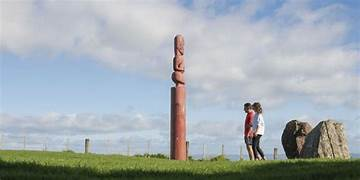
Kotahi tonu te tipuna o tēnei motu ko Takotako!
There is but one ancestor of this island — it is Takotako!
This article speaks to the cultural bridge we have needed to rebuild in order to reconnect with our Māoritanga — my personal path, and the path we all take to mend the disruption and disconnection caused by colonisation.
In November last year, the book Tūhoe by Elsdon Best was republished with the assistance of modern-day scholar Rāpata Wiri. I want to speak about the role I see this book playing in the context of the Mataatua-affiliated tribes we were raised within, and what I look forward to on the horizon in terms of Māori cultural connection and integration.
With the dispossession of colonisation and the suppression of Māori culture, books like Tūhoe, and others written by both Pākehā and Māori alike, in many cases took the place of the wharenui and home learning that our grandparents’ generation — in most iwi — saw the end of. Our parents’ age group was sent off toward the Pākehā world, and the transmission of Te Reo Māori and mātauranga Māori largely ended in that period.
E tamariki ana au ka whiua te kupu e, nā te pukapuka kē ia i ako!
When I was young, people got accused of only learning from the book!
Nō taku pakekehanga kua ngotea e au te mana tapu o te pukapuka!
But as I grew older I grew to see the sacredness in the books!
With the advent of the Kōhanga Reo and Kura Kaupapa movement in the 1980s, of which I was a part, we saw a revival of te reo and mātauranga, and many tribal books began being consulted as curriculum.
In my particular instance, much of the curriculum we learned — mostly through song — was novel material developed by our teacher and his partner themselves. This experience led me on a path to make sense of it all. I did this by seeking guidance from pakeke and through reading.
One of the sources left with us by our teacher — from which I have been learning — was an informant born in the 1800’s to the newly republished Tūhoe book, which, from memory, contains at least 500 pages or so on spiritual whakapapa and explanatory matters. It is in English with some Māori text with translation by ethnographer Elsdon Best, a man of his time who held racist and sexist views that are evident at times in the writing. However, he also translated much of the material carefully, and for those who do not speak Māori, I believe this Bay of Plenty–focused whakapapa, spirituality, and explanation is the most comprehensive I have seen in one place. It contains star knowledge and tohunga knowledge that, while limited, provides a strong starting point.
In my research experience, if you were to take the knowledge from this book and immerse it in te reo and tikanga, it offers a powerful explanation — from the beginning of time to now — of Māori spirituality for those linked to Mataatua and beyond.
That brings me to the future of our endeavour to move toward this kind of comprehensive, immersive understanding. On the horizon, we have many candidates and passionate tohunga and leaders — women and men — who have bridged, and will continue to bridge, this gap for us all. For the tribal territory I speak of today and the nation, I believe the work of Rangi Mātāmua in particular is much anticipated and will do much to help us connect from the beginning of time to today, integrated within the entire environment. This makes it beautifully Indigenous to Aotearoa and deeply important — and frankly, a unique pathway to reconnect with the environment as it faces the impacts of capitalism and climate change. These leaders also have the ability to frame the experience in Te Reo and tikanga Māori, which marks a key difference from Elsdon Best’s work as we embrace a new generation of Te Reo speakers. This is all exciting.
Te Kooti said: Tēnei te tira hou tēnei te hara mai nei!
Here comes the new generation to lead!
For these reasons, and for the rapidly evolving Māori cultural reconnection that we are all part of in some way, I say kia ora to one and all.
Taku taotao i te moana nei ka mao ka marino!
The prayer to pass the wavy ocean!


