The Problem with the Term Tangata Tiriti
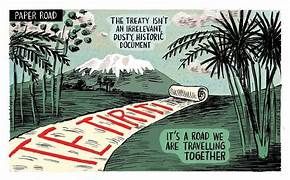
The phrase Tangata Tiriti — often translated as “people of the Treaty” — is a term for non-Māori in New Zealand. It’s been attributed to Sir Eddie Durie and has grown in popularity over recent decades. While I understand its intention, I use the term Pākehā for myself, and I thought I would give an explanation.
I was raised within Māori education and embraced by my Māori community from a young age. That was a privilege — one my twin (we both grew up this way) and I will always value., I remember the self-loathing inside of me in my younger years at the mere label “Pākehā”, and our common term for racist or offensive Pākehā “ballheads”. I felt so embarrassed since my only parent was an activist and, in my view, didn’t love his Pākehā culture like he could have. I was known as Hēmi mostly at school, which is a translation of James. I reached a point in my life where I wanted a Māori name, but I have always thought it cringeworthy for Pākehā to take Māori names, considering colonization and the fact that many Māori were not given Māori names. I made up a joke name with my teacher after beginning to go bald. I took the joke name Pākira, which means bald head but I told my teacher it was a joke for “ballhead” and we laughed. This was a sign, perhaps that I was over feeling shame inside for who I was (not that I have ever fully embraced what a “ballhead” means, but for being Pākehā and being able to joke about it).
Oftentimes, when I tell people how we grew up, they are filled with positivity and say I was so lucky. We were lucky to grow up in our community. Still, our family circumstances and really the personal isolation I experienced, I would advise something different from our particular circumstances for other Pākehā families thinking of placing their child in a Kaupapa Māori setting.
When I was about eighteen, I began what I now think of as my personal “help me understand myself” tour — interviewing older relatives about our family history and visiting Māori kaumātua for tea and conversation. These experiences deepened both my understanding of Māori culture and my appreciation for my Pākehā culture
Over the years, I’ve suggested to managers working in Māori education that one powerful way to teach Māori culture and raise people’s analysis of it, would be to use Pākehā culture as a comparison. Therefore, when exploring, say a Māori tikanga or ethic, ask what compares or differs here in the Pākehā world? And do so in an honest and affirming way that may lead to a more refined understanding of what Māori tikanga is.
One issue I see in some corners of Māori activism is the tendency to idealise pre-European Māori life as if it were solely about “Rangatira” (nobility) and ora (wellbeing), while we still have so much to learn from Māori culture, like any society, traditional Māori culture was not perfect. Colonisation has undeniably caused deep loss, and for many people, an idealising of Māori culture can serve as like a self-help group that I find sometimes isn’t based in reality.
Colonisation, in my view, dispossesses everyone in different ways. Many non-Māori in New Zealand grow up with little knowledge of their own history and culture. For some, the first real encounter with New Zealand’s history comes through Māori perspectives on colonisation and capitalism. This may lead them to adopt the “Tangata Tiriti” label as a way of affirming the Treaty’s importance — which is understandable, as Te Tiriti o Waitangi is a foundational document that has never been fully honoured.
But for me, my sense of identity includes but reaches beyond Te Tiriti. It includes the stories, values, and ethics of my own family. That’s why I continue to call myself Pākehā. I sometimes see liberal Pākehā groups struggle with identity — borrowing from Māori culture, such as praying in English while invoking Ranginui and Papatūānuku for example. I find it cringe, but others don’t, and as long as no one is getting hurt or offended, kia kaha to them. I guess my point is, who cares how anyone prays? Each to their own.
I can’t help but wonder if those doing the hybrid of pakeha and Māori prayers have fully explored their own cultural inheritance before mixing Māori traditions. It’s something I believe iwould be helpful for our country to do: raise awareness of Pākehā culture. So many people I work with often have no awareness of what’s right in front of all of us, For its music family history, community, terrible things, local and national stories, values, love, principles and so on. Then we can choose more consciously which of these to maintain, strengthen, or discard. if we Pākehā saw how everywhere our culture is, then hopefully we can be more humble and careful with it.
I just speak of this as a nerdy Pākehā i think its way down the list of important things for our country , like adressing material poverty and rebuilding Māoritanga.
Before concluding this article, which is admittedly limited to my identity as Pākehā and the term Tangata Tiriti, I want to acknowledge that all ethnicities other than Māori can fit under this term, and no doubt many would embrace it, Which is awesome. Here is a short kōrero on how I think about how Pākehā fit into the Māori world in Te Reo Māori, with a translation.
Ki te marena te Pākehā ki te iwi Māori, ka noho hungarei, ki te kore karekau ana ki taku whakaaro ōna tūranga ki Te Ao Māori. Nōku ka ako ki te tū I te marae ki te mihi kōrero, I kīa au me Māori taku mahi, nō reira ko taku whakaaro me waiho iti I te Pākehā āna tikanga, tōna reo me ana hanga I te ao Māori, I kīngia me whakaiti, me manawanui, me tupato . He kōrero anō pea kua kite, kua rongo au I ngā tau, he Pākehā anō I aroha, i hirinaki te Māori, he pūmanawa, he korou tangata nōwhea e wareware, pai mārire
if a Pākehā were to marry within a Māori community, they would be known as a parent-in-law. Without some type of family marriage, in my view, there is no standing for a Pākehā in the Maōri world. When I learnt how to stand and do oratory on the marae, I was told to do such things in the Māori culture we were raised in. I therefore believe we should carry very humbly our Pākehā culture into the Māori world, it is said to be humble to be tolerant and careful. Another thing I have heard in the years is that there are Pākehā that Māori have loved and relied upon, and these are human virtues, human spirit, that won’t be forgotten. Good Peace.